
How to Search Criminal Dockets
Start your search at the Arizona Public Access to Court Information index. It is free. You can search by name or case number, and you can limit results to an Apache court. Name mode works best with the Last/Business Name plus just a first name; add date-of-birth filters or a court only if the results are too broad. In number mode, keep the prefix and digits exactly as they appear on the ticket or pleading. The official example splits a prefix like TR from its number. Superior Court criminal cases usually carry a CR prefix. Public Access refreshes weekly. It is not the official record. Use it to find the court, the full case number, the filing date, and the current status, then confirm the Apache County criminal docket with the court that owns the case. A sensible order:
- Choose name or case-number search and narrow the court to Apache County.
- Match the result by court location, filing date, and full case number.
- Open the case detail and read events and charges in chronological order.
- Check the newest future hearing, then confirm it with the court clerk.
- Use eAccess or the clerk when the actual filing or a certified copy is needed.
Apache County Criminal Docket Portals
Three tools, three jobs. Public Access is the free index for finding cases. The Arizona eAccess service sells document images for eligible Superior Court civil and criminal filings made from July 1, 2010 forward. eFileAZ sends filings to the court. It is not a public reading tool. Apache eFileAZ accepts later criminal filings but never starts a criminal case.
| Channel | Best Use | Key Limit |
|---|---|---|
| Public Access | Find public case and event information | Weekly lag and stated exclusions |
| eAccess | Review eligible Superior filings | Account required; documents cost $10 |
| Owning clerk | Older, certified, missing, or lower-court records | Fees may apply to staff work and copies |
An eAccess preview shows a watermark and is marked unofficial. Some entries read “Document Not Available Online.” That label points you to the clerk. It does not mean the filing disappeared.
What a Criminal Docket Shows
Case-level facts and count-level outcomes are different things on an Apache County criminal docket. Look at the court and current status first. Then read every charge. One count can sit pending while another was dismissed or resolved. Event Information is the dated log of filings and court action. Hearing Information gives the courtroom, date, hearing type, and any result that was entered. A blank result usually means none exists yet.
| Case Information | Case number, filing date, title, category, status, court location, and judicial officer. |
|---|---|
| Party Information | Public participants, their roles, and associated attorneys. |
| Charge Information | Statute, description, classification, and a separate disposition for each charge. |
| Event Information | Chronological filing, motion, order, and court-action labels. |
| Hearing Information | Courtroom, date, purpose, and result when the court enters one. |
The event label is not the paper itself. A document icon may open a preview or a purchase page. Read the signed order or judgment before you rely on the short event description.
Apache County Criminal Charge Outcomes
Outcome language on an Apache County criminal docket works at the charge level. “Pending” means no final result yet. “Dismissed” means that count or case ended without a conviction on that count. A conviction follows a plea or verdict. “Not guilty” records an acquittal. Sentencing is the sanction stage, and an appeal means someone sought review. A set-aside entry is not a sealing.
- Motion: Continue
- A request to move a date or deadline, not proof that the judge approved it.
- Order: Granting
- A signed or entered ruling approving the request identified by the order.
- Hearing result
- The outcome of a setting, which is not necessarily the outcome of a charge.
- Disposition
- The recorded result for the case or an individual count.
The newest docket entries matter most after a first judgment. Sentencing, enforcement, post-judgment motions, or an appeal can each add later entries to the Apache County criminal docket.
Stages on a Criminal Docket
A criminal case can begin with a complaint, an indictment, or an information. Initial appearance and arraignment entries cover rights, release, charges, and the plea. Motions and pretrial settings come next. A plea or trial may produce a disposition. Sentencing and possible review come after. Read Apache County criminal docket events in order. The status line alone never tells the whole procedural story.
Docket flow: Filing › Arraignment › Pretrial › Plea or Trial › Disposition › Sentencing
A future setting is not a result. Arraignment states the charge and takes the plea. Law and Motion handles filed requests. Only a later ruling, verdict, plea, or judgment supplies the outcome the Apache County criminal docket records.
Apache County Criminal Motion Days
The current Superior Court page lists criminal Law and Motion on Mondays and Wednesdays. Older local rules describe Monday Law and Motion Day, with a Tuesday shift after a Monday holiday. When the two differ, let current court information control. Even so, verify any setting you see online with the clerk or the courtroom clerk. Apache County has one Superior Court judge. That single calendar shapes felony dockets across the whole county. Hearing blocks in Public Access and eAccess help. But old settings stay in the record, and data can lag behind reality. The Clerk's records line is 928-337-7550. The courtroom clerk is 928-337-7204. The official Superior Court calendar also tells readers to confirm full case information with the case number.
Which Court Holds Criminal Dockets
Where a criminal docket lives depends on the charge. Apache County felony prosecutions belong to the Superior Court of Arizona. Justice Courts handle misdemeanors, DUI and other traffic matters, plus preliminary felony stages within their jurisdiction. Municipal Courts take city and state misdemeanors and traffic cases inside city limits. So a felony often leaves an early lower-court record. It gains a Superior Court identity later. A misdemeanor usually stays put unless someone appeals. Always ask the originating court first. That is where the source file sits. Chinle and Puerco hearing districts now run through Northstar after their 2023 consolidation. Round Valley Justice Court and St. Johns Justice/Municipal Court each keep their own limited-jurisdiction matters. Eagar and Springerville Municipal Court operations share space, yet their records stay separate. The Apache County Justice Courts directory helps you spot the right clerk fast.
Apache County Criminal Docket Appeals
Appeals do not fold everything together. An Apache County criminal docket from a Justice or Municipal Court stays with its originating clerk even after review begins. Apache Local Rules make the appellant arrange a typed docket sheet or certified document index. That record then supports review in Superior Court. The Superior Court Clerk maintains the appeal filed there. A second appeal moves higher. Apache County Superior Court cases go up to the Arizona Court of Appeals, Division One. Each level needs its own case number. If the number you already have fails to pull up the appeal, ask the clerk for the appellate case identity instead of guessing formats. Every level of the Apache County criminal docket reveals a different stage of review.
Older Apache County Criminal Dockets
Online history has limits. Free Apache Superior case information reaches back to 1995. Eligible eAccess document images begin July 1, 2010. An older Apache County criminal docket can still exist. Its filing will not open online. Stored material means calling the Clerk. Give staff the full case number. They can then locate the file and quote any retrieval time.
The Apache County Clerk of the Court allows free self-search at the courthouse. Staff-assisted research or copies need the official records form. You can fax a request to 928-337-2771. Alternatively, drop it at 70 W. 3rd South in St. Johns. Or mail it with payment to PO Box 365, St. Johns, AZ 85936. Spell out the exact docket sheet, event, order, or judgment you want. Add the case number, name, and relevant date span. Expect roughly three to five days, longer when volume or storage slows things down.
Public Access and Sealed Criminal Dockets
Arizona Supreme Court Rule 123 sets the access rules for judicial records. Public Access bars sealed cases, orders of protection, mental-health and probate matters, victim and witness data, most juvenile information, and local-ordinance charges. A blank Apache County criminal docket result may simply mean the wrong court, a misspelled name, a weekly lag, coverage that stops too early, or a lower-court file. An empty search is never proof of sealing.
Key access rules:
Arizona Supreme Court Rule 123 governs public access to Arizona judicial records and preserves lawful confidentiality.
A.R.S. §13-911 permits qualifying petitions to seal criminal case records and limits disclosure after sealing.
A.R.S. §8-208 regulates juvenile record access and protects specified case and victim information.
Want a sealed file? The Apache County Clerk will point you to the judge. Write the judge directly. Explain your interest. Name the exact documents. No general public-record request can override a court order or statute.
Apache County Criminal Record Sealing
Record sealing has its own path. A.R.S. §13-911 can cover qualifying completed convictions, dismissals, not-guilty results, or arrests that never brought charges. Coverage is subject to exclusions and to payment of fines, fees, and restitution. File the petition in the court tied to the conviction, the case filing, or the initial appearance. Where no case was filed but the law allows it, the petition goes to Superior Court in the arrest county. The statute usually allows 60 calendar days before a decision unless objections are waived.
The Arizona Judicial Branch sealing instructions walk through the petition. They also cover the locating details each court needs. That official page lays out the practical process step by step.
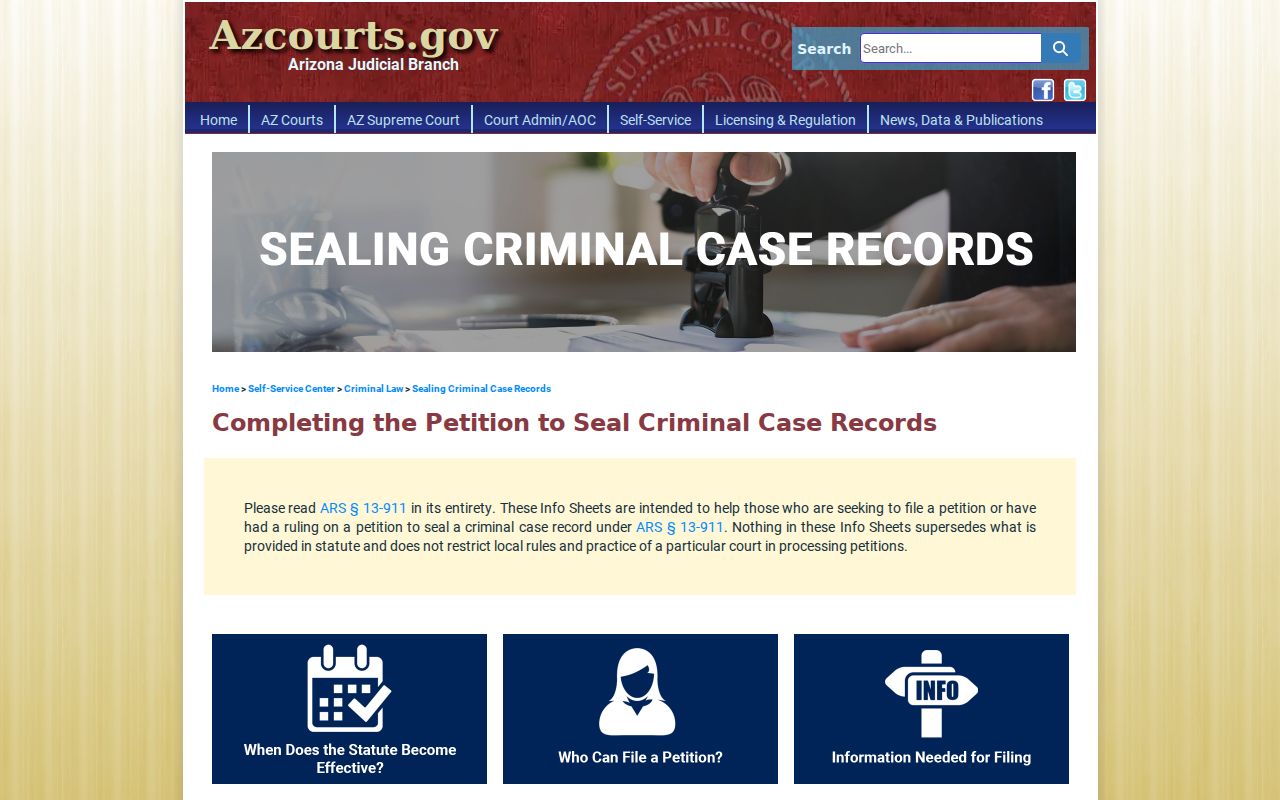
A petition is not a docket search. Sealing a record works separately from any ordinary Apache County criminal docket lookup. It restricts public access, yet it does not erase every agency copy or explain why some result is missing.
Apache County Criminal Docket Images
State law decides what a sealing order actually does to access. The official A.R.S. §13-911 text carries the qualifying framework and the statutory limits.
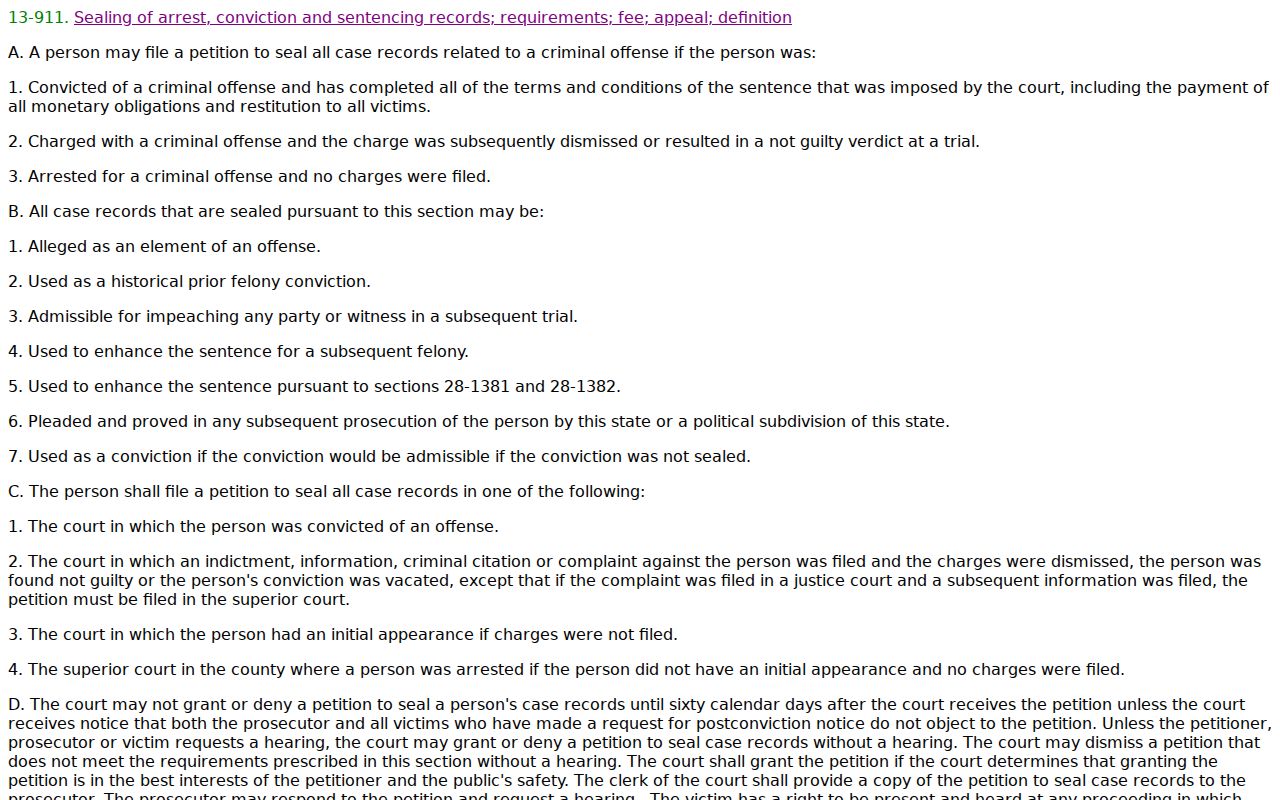
Read the statute together with the court's petition instructions and the actual order in the case. Remember what a docket entry is. An Apache County criminal docket entry works as a short index label, while the filed order controls its scope.
Confirm Apache County Criminal Dockets
Sometimes the index, the image service, and the hearing calendar still leave you stuck. Then contact the clerk that owns the case. A Superior felony goes to the Apache County Superior Court Clerk. Reach that office by phone, free courthouse search, faxed form, mailed form, or counter request. A misdemeanor, DUI, municipal charge, or preliminary felony event belongs elsewhere. It sits with the specific Justice or Municipal Court. Questions about a setting can go straight to the courtroom clerk.
Be precise about what you need. The docket is the event index. A motion, order, or judgment is the document behind an entry. A certified copy carries the clerk's authentication. Public Access costs nothing but is not certified. Likewise, eAccess purchases are not automatically certified either. For a fuller name or number walkthrough, the Apache County case search explains the statewide fields and the court filter.
Note: Keep the complete case number and name the owning court. Do this before requesting any Apache County criminal docket copy or certification.